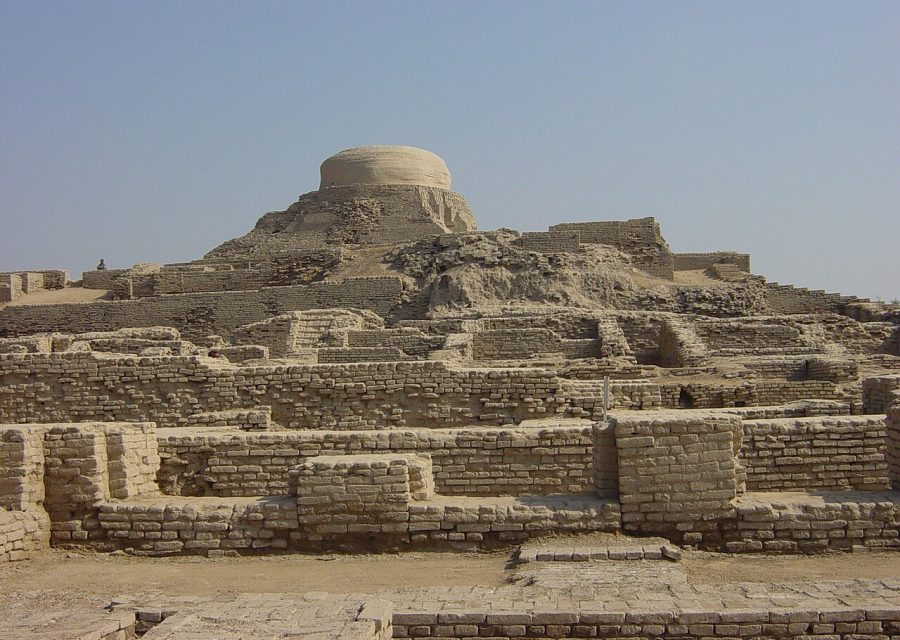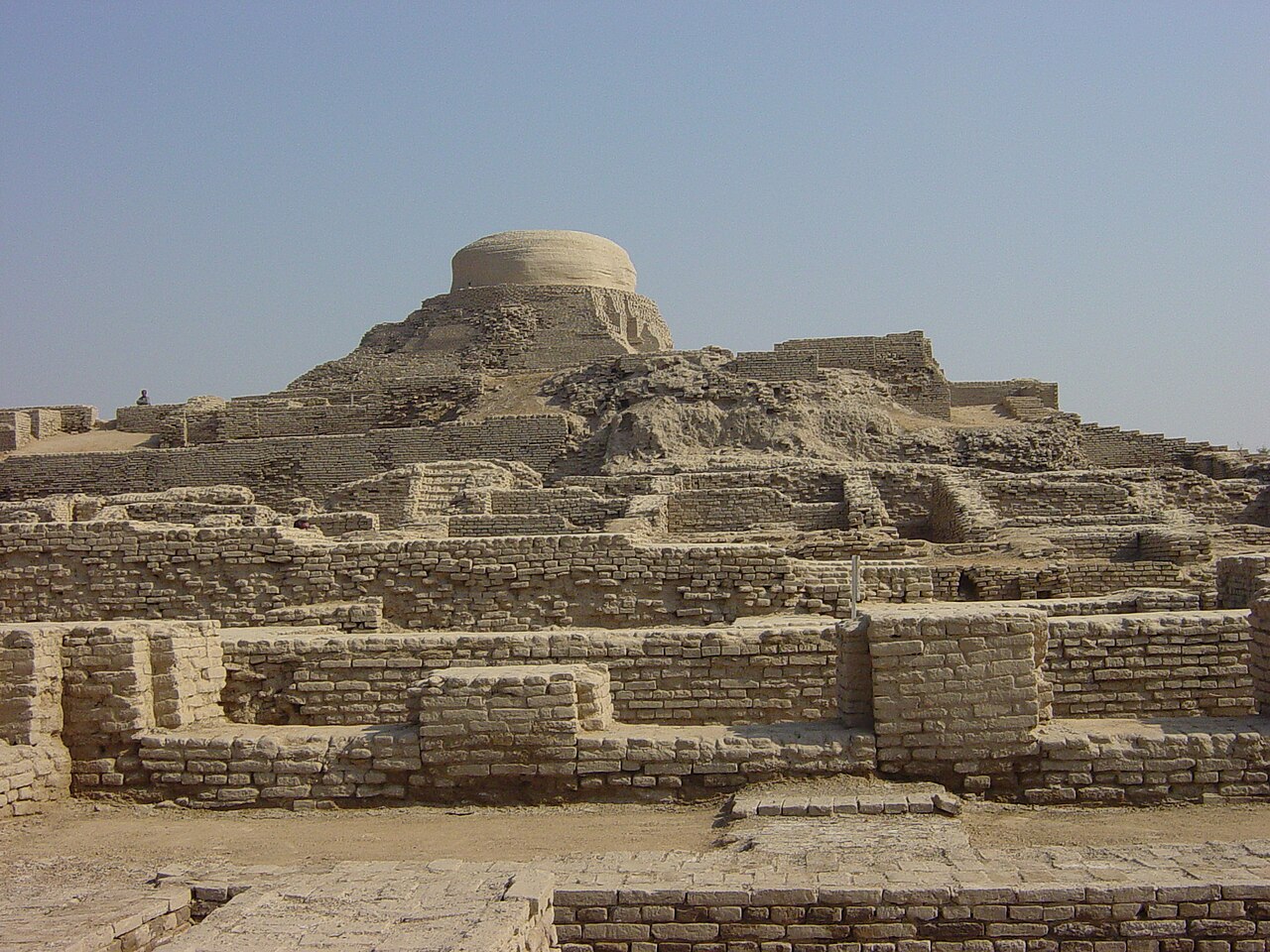
Mohenjo-daro was one of the largest cities of the Indus Valley civilisation, built around 2500 BC and abandoned several centuries later. Its grid of streets, covered drains, wells and the raised citadel with the Great Bath show remarkable urban planning. It was inscribed by UNESCO in 1980. The site museum displays seals, pottery and replicas of famous finds such as the ‘Priest-King’.
What to do
- Walk the citadel. See the Great Bath, the granary and the Buddhist stupa added much later.
- Explore the lower city. Brick streets, houses and drains laid out on a grid.
- Visit the museum. Seals with the undeciphered Indus script.
- Stay for sunset. The brick glows warm red in the low light.
Getting there
Mohenjo-daro has a small airport with limited flights; most visitors drive via Larkana or Sukkur. Hire a car with driver from Sukkur or Larkana.
When to go
Best time to visit: November–February.
Good to know
The site is vast and shadeless: visit early in winter, wear a hat and do not climb on the fragile walls.
Combine it with
- Sukkur and Rohri: Twin river towns on the Indus, with the Sukkur Barrage, the island temple of Sadh Belo and the Lansdowne Bridge.
- Kot Diji Fort: A brick fort of the Talpur rulers on a rocky ridge, above one of the oldest archaeological sites in the Indus valley.
Where to stay near Mohenjo-daro
Further reading
- How to get to Mohenjo-daro
- Best time to visit Mohenjo-daro
- Day trip from Karachi to Mohenjo-daro
- One day in Mohenjo-daro & upper Sindh
- A weekend in Mohenjo-daro & upper Sindh
- 3 days in Mohenjo-daro & upper Sindh
- Things to do in Mohenjo-daro & upper Sindh