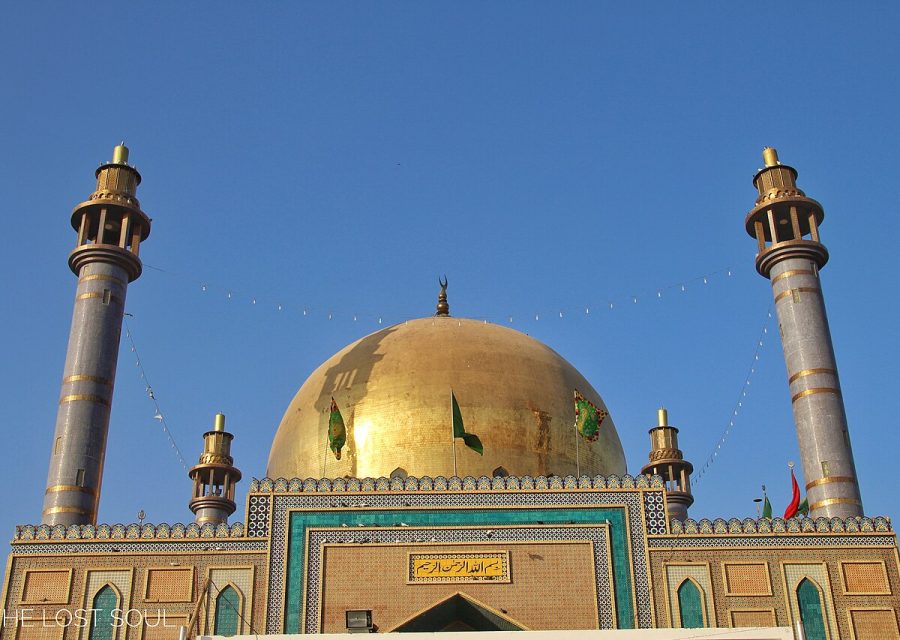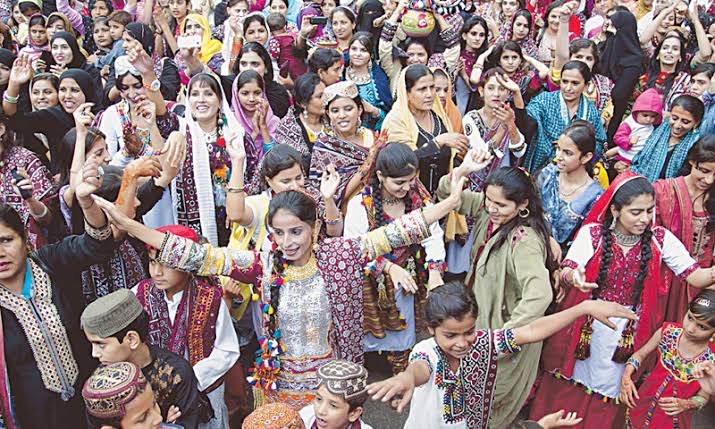
Shah Abdul Latif Bhittai (1689–1752) is Sindh’s national poet; his Shah Jo Risalo is recited and sung across the province. His blue-tiled shrine at Bhit Shah draws pilgrims year-round, and musicians perform his poetry on the tambooro, a long-necked lute, especially on Thursday nights and during the annual urs.
What to do
- Hear the raag. Fakirs sing Bhittai’s verses in the evenings.
- See the tilework. Blue and white Sindhi tiles cover the shrine.
- Visit the cultural centre. Exhibits on Bhittai’s life and Sindhi culture.
- Buy ajrak and Sindhi caps. Stalls around the shrine sell local crafts.
Getting there
Bhit Shah is just off the National Highway north of Hyderabad, near Hala.
When to go
Best time to visit: November–February.
Good to know
Combine it with Hala, known for its glazed pottery and woodwork, a few kilometres away.
Combine it with
- Sehwan Sharif: The town of the 13th-century Sufi saint Lal Shahbaz Qalandar, whose shrine fills every evening with drums and the whirling dhamaal dance.
- Ranikot Fort: The ‘Great Wall of Sindh’: a vast fort whose walls snake for over 30 km across the barren Kirthar hills.
Where to stay near Bhit Shah
Further reading
- How to get to Bhit Shah
- Best time to visit Bhit Shah
- Day trip from Karachi to Bhit Shah
- One day in Sehwan & central Sindh
- A weekend in Sehwan & central Sindh
- 3 days in Sehwan & central Sindh
- Things to do in Sehwan & central Sindh