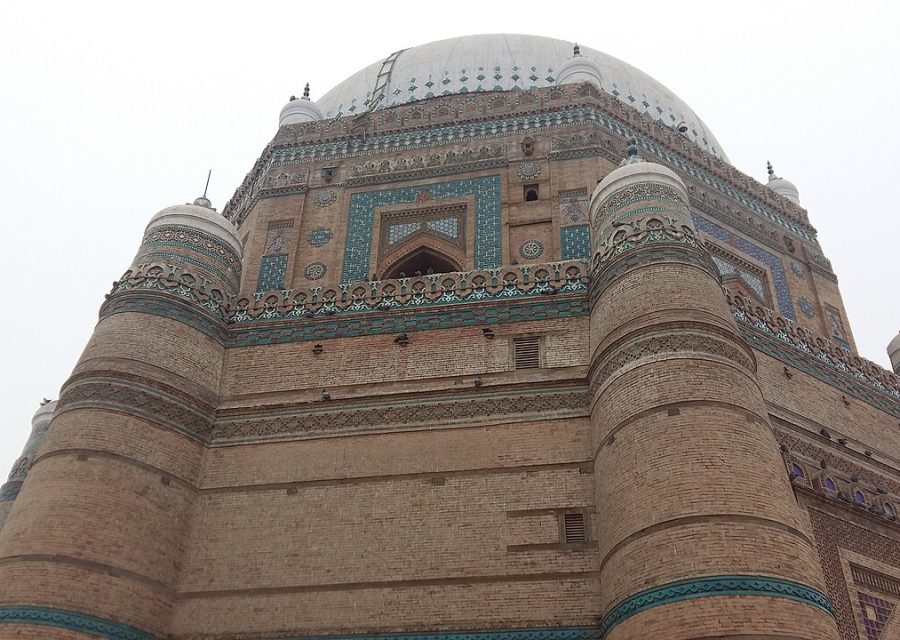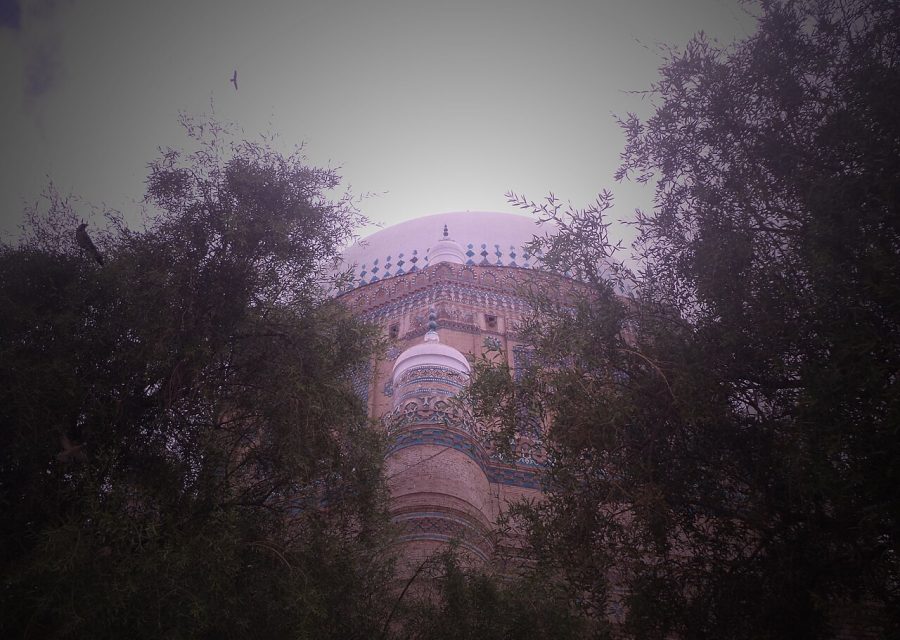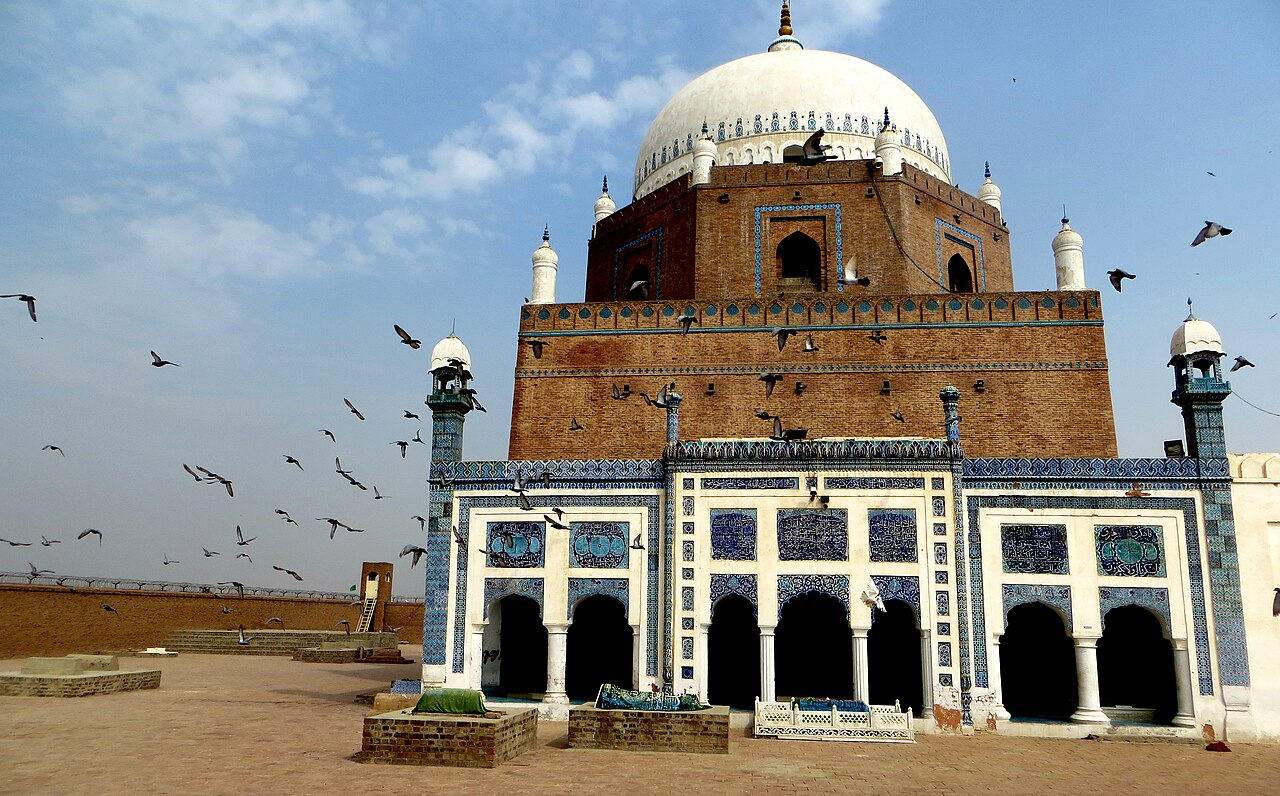
Bahauddin Zakariya (about 1170–1262) made Multan a centre of Sufi learning. His square brick tomb, with a dome on an octagonal drum, stands near the tomb of his grandson Shah Rukn-e-Alam on the old fort mound.
What to do
- Visit the shrine. Join pilgrims in the courtyard.
- Hear qawwali. Especially on Thursday evenings and at the urs.
- Combine with Rukn-e-Alam. The two shrines are a few minutes apart.
- Explore the old city. Bazaars below the fort mound.
Getting there
Walk up to the fort mound (Qasim Bagh) in central Multan.
When to go
Best time to visit: November–February.
Good to know
During the urs the shrine is very crowded; keep valuables safe.
Combine it with
- Multan: One of the oldest cities in South Asia, known as the city of saints for its blue-tiled Sufi shrines, and for blue pottery and sohan halwa.
- Tomb of Shah Rukn-e-Alam: A great octagonal brick mausoleum of the 14th century, covered in blue and white glazed tiles, rising over Multan.
Where to stay near Shrine of Bahauddin Zakariya
Further reading
- How to get to Shrine of Bahauddin Zakariya
- Best time to visit Shrine of Bahauddin Zakariya
- Day trip from Multan to Shrine of Bahauddin Zakariya
- One day in Multan
- A weekend in Multan
- Things to do in Multan
- Where to stay in Multan