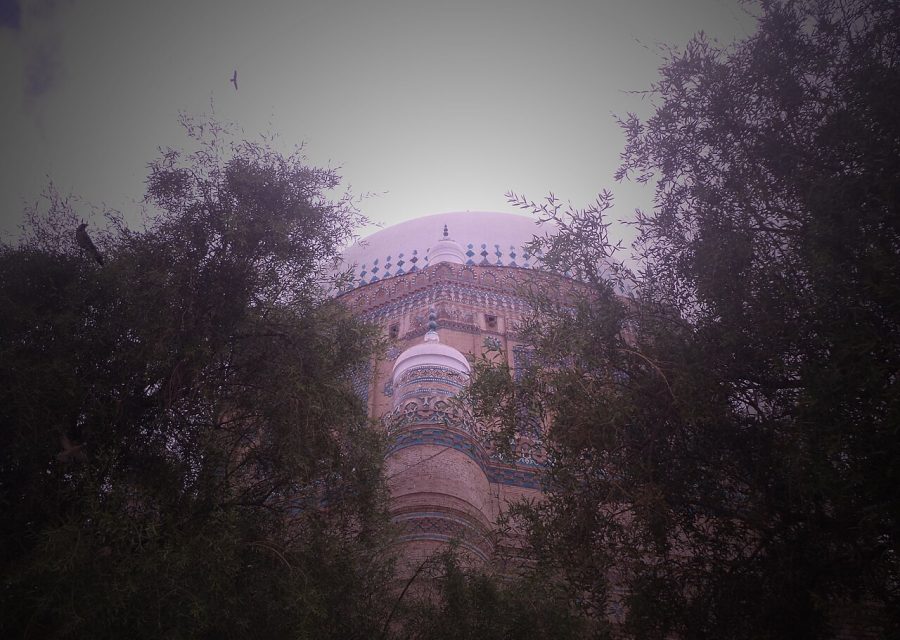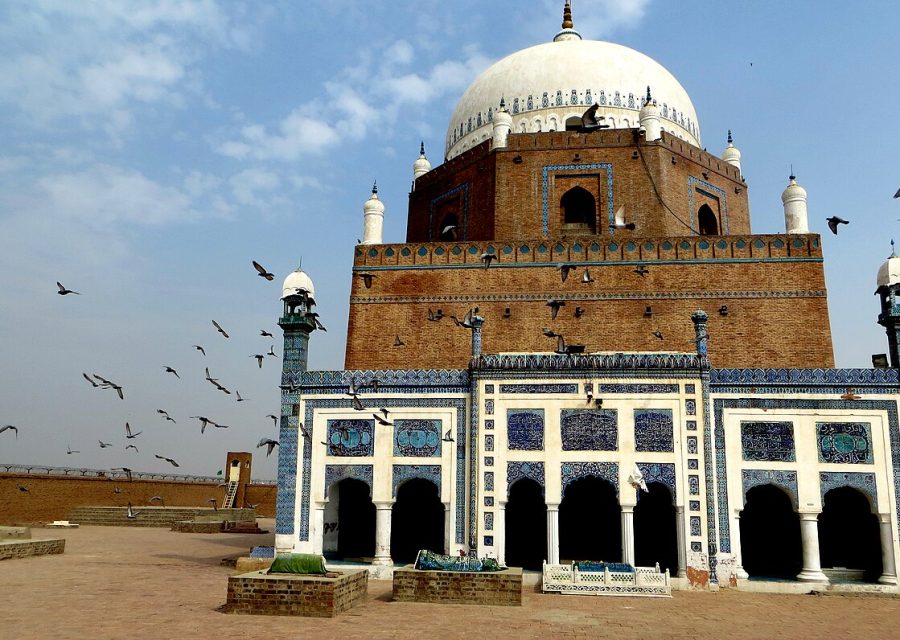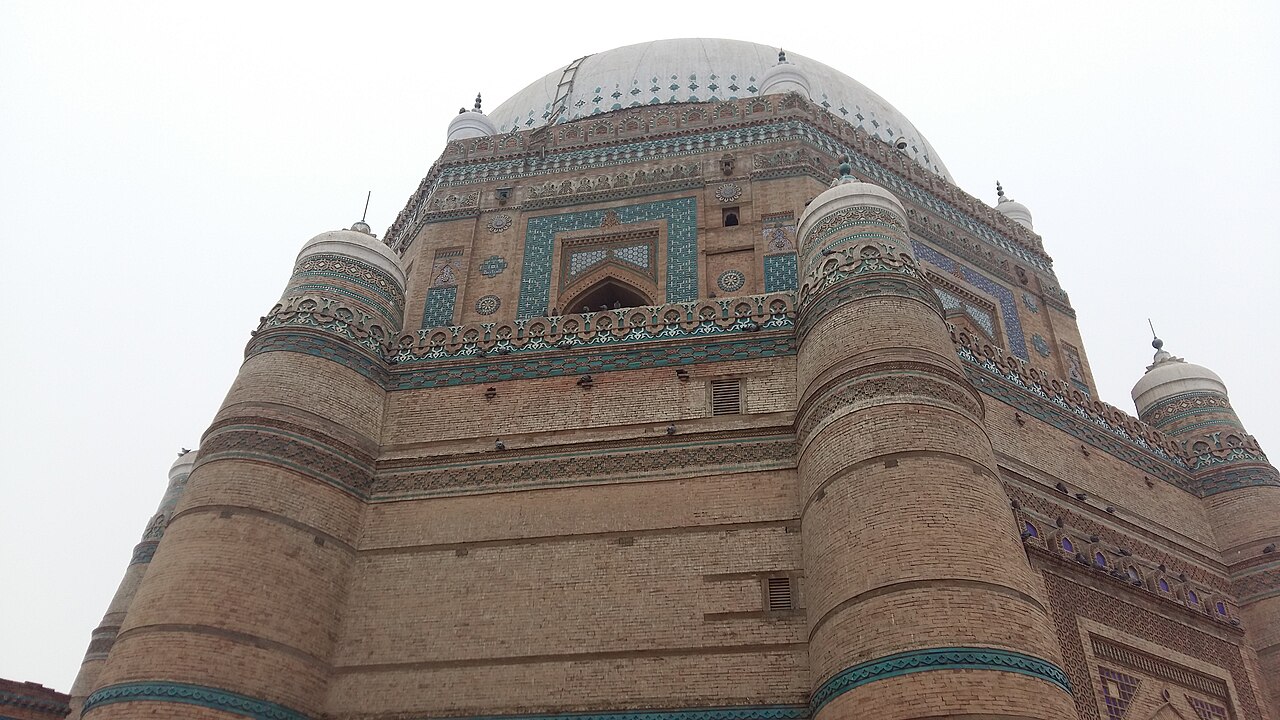
The tomb of the Sufi saint Shah Rukn-e-Alam was built in the early 14th century, traditionally attributed to Ghiyath al-Din Tughluq. Its octagonal brick body, tapering corner towers and huge dome make it one of the most important early tombs in South Asia. It was restored by the Aga Khan Trust for Culture in the 1970s.
What to do
- Admire the brickwork. Carved brick and glazed tile bands.
- Step inside. The vast domed chamber.
- Look out over the city. From the fort mound.
- Visit Bahauddin Zakariya next door. The saint’s grandfather’s shrine.
Getting there
Walk up to the fort mound (Qasim Bagh) from Hussain Agahi or Ghanta Ghar.
When to go
Best time to visit: November–February.
Good to know
Dress modestly and cover your head inside the shrine.
Combine it with
- Multan: One of the oldest cities in South Asia, known as the city of saints for its blue-tiled Sufi shrines, and for blue pottery and sohan halwa.
- Shrine of Bahauddin Zakariya: The 13th-century shrine of one of the founders of the Suhrawardi Sufi order in South Asia.
Where to stay near Tomb of Shah Rukn-e-Alam
Further reading
- How to get to Tomb of Shah Rukn-e-Alam
- Best time to visit Tomb of Shah Rukn-e-Alam
- Day trip from Multan to Tomb of Shah Rukn-e-Alam
- One day in Multan
- A weekend in Multan
- Things to do in Multan
- Where to stay in Multan