Our pick of the Makran coast road trip across every province, with links to full guides.
Sindh
- Karachi: Pakistan’s largest city: a sprawling, restless port with colonial stone streets, the white Mazar-e-Quaid, sea breezes in Clifton and some of the best street food in the country.
- Mazar-e-Quaid: The white marble mausoleum of Muhammad Ali Jinnah, Pakistan’s founder, set in wide gardens in the heart of Karachi.
- Frere Hall: A Venetian Gothic hall of yellow and grey stone from the 1860s, set in gardens near the Marriott, with a library and a Sunday book market.
- Mohatta Palace: A pink-stone palace of domes and turrets in Clifton, built in the 1920s and now a museum of art and heritage.
- Empress Market: Karachi’s great Victorian market hall, with a clock tower above stalls of spices, dried fruit, meat and birds.
- Wazir Mansion: The house where Muhammad Ali Jinnah was born in 1876, now a small museum in the old trading quarter of Kharadar.
- Chaukhandi tombs: A field of carved sandstone tombs on the edge of Karachi, decorated with geometric patterns, jewellery and horsemen.
- Makli necropolis: One of the largest necropolises in the world: a ridge of tombs and mausoleums from the 14th to 18th centuries, a UNESCO World Heritage Site.
- Shah Jahan Mosque, Thatta: A 17th-century Mughal mosque famous for its brick domes and the finest tilework in Pakistan.
- Banbhore: The ruins of an ancient port city on the Gharo Creek, with the remains of one of the earliest mosques in South Asia.
- Sehwan Sharif: The town of the 13th-century Sufi saint Lal Shahbaz Qalandar, whose shrine fills every evening with drums and the whirling dhamaal dance.
- Ranikot Fort: The ‘Great Wall of Sindh’: a vast fort whose walls snake for over 30 km across the barren Kirthar hills.
- Bhit Shah: The shrine of Shah Abdul Latif Bhittai, the beloved 18th-century poet of Sindh, where his verses are sung every night.
- Mohenjo-daro: The planned brick city of the Indus civilisation, about 4,500 years old, with its Great Bath, streets and drains: a UNESCO World Heritage Site.
- Sukkur and Rohri: Twin river towns on the Indus, with the Sukkur Barrage, the island temple of Sadh Belo and the Lansdowne Bridge.
- Kot Diji Fort: A brick fort of the Talpur rulers on a rocky ridge, above one of the oldest archaeological sites in the Indus valley.
Balochistan
- Ziarat and the Quaid-e-Azam Residency: A hill town in one of the world’s largest juniper forests, where Jinnah spent his final weeks in a wooden residency.
Punjab
- Walled City of Lahore: The old city of Lahore inside its thirteen gates: bazaars, havelis, mosques and some of the best food in Pakistan.
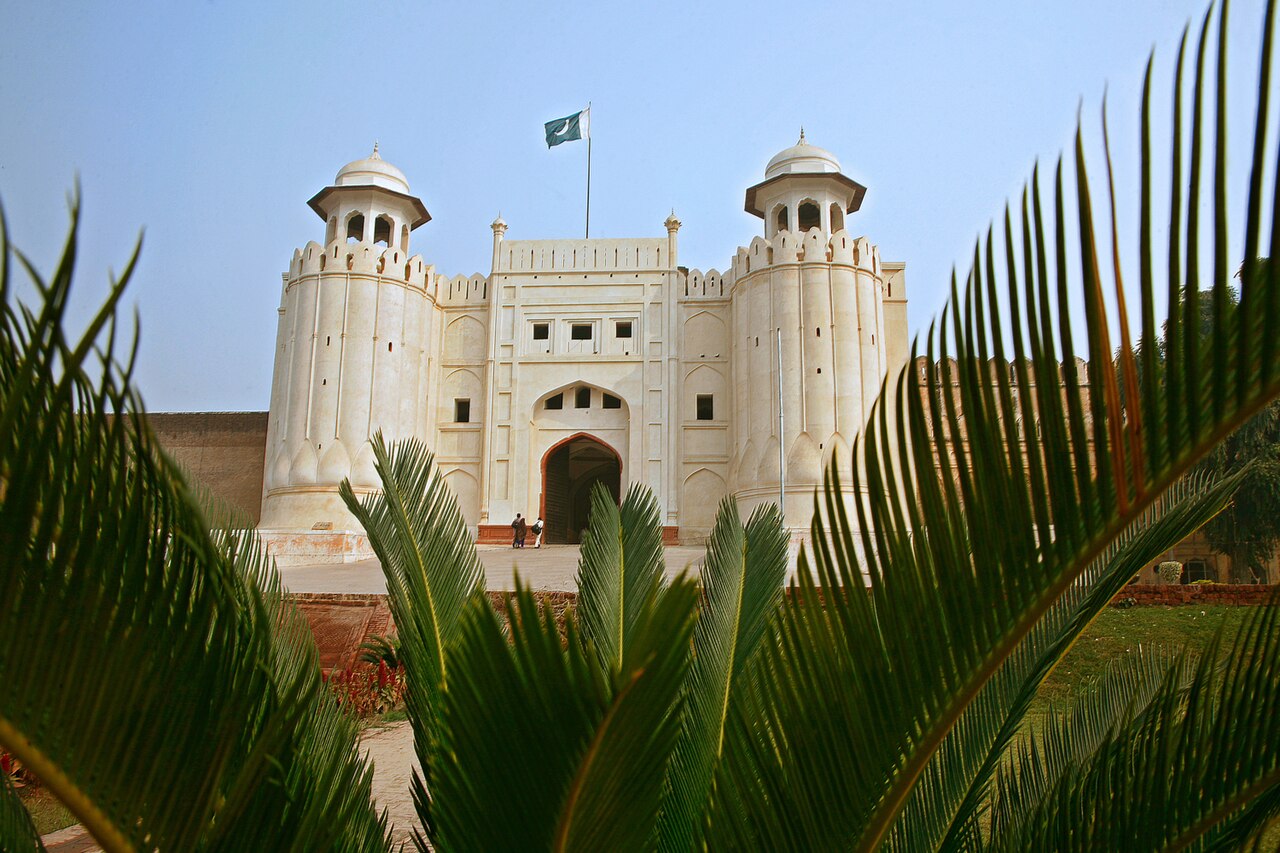
- Lahore Fort: The Mughal citadel of Lahore, with the Sheesh Mahal, the Picture Wall and palaces of Akbar, Jahangir and Shah Jahan: a UNESCO World Heritage Site.
- Badshahi Mosque: Aurangzeb’s vast red sandstone mosque of 1673, with marble domes and a courtyard that can hold tens of thousands of worshippers.
- Wazir Khan Mosque: The most richly decorated Mughal mosque in Pakistan, covered inside and out in tile mosaic and fresco.
- Shalimar Gardens: Shah Jahan’s terraced Mughal garden of 1641, with pools, fountains and marble pavilions: a UNESCO World Heritage Site.
- Minar-e-Pakistan: The tower marking the place where the Lahore Resolution was passed on 23 March 1940, in a large public park.
- Fort Road Food Street: A lane of restored old houses with rooftop restaurants looking straight at Badshahi Mosque.
- Tomb of Allama Iqbal: The red sandstone tomb of the poet-philosopher Muhammad Iqbal, who first imagined Pakistan.
- Taxila: Ruined cities and Buddhist monasteries of Gandhara, spanning a thousand years: a UNESCO World Heritage Site.
- Jaulian monastery: A hilltop Buddhist monastery near Taxila with votive stupas and stucco figures of the Buddha still in place.
- Rohtas Fort: Sher Shah Suri’s massive 16th-century military fort, with walls over 4 km long and twelve gates: a UNESCO World Heritage Site.
- Katas Raj temples: A complex of Hindu temples around a sacred pool in the Salt Range, linked in legend to Shiva and the Pandavas.
- Tilla Jogian: The highest peak in the eastern Salt Range, crowned by an ancient monastery of the Kanphata yogis.
- Multan: One of the oldest cities in South Asia, known as the city of saints for its blue-tiled Sufi shrines, and for blue pottery and sohan halwa.
- Tomb of Shah Rukn-e-Alam: A great octagonal brick mausoleum of the 14th century, covered in blue and white glazed tiles, rising over Multan.
- Shrine of Bahauddin Zakariya: The 13th-century shrine of one of the founders of the Suhrawardi Sufi order in South Asia.
- Noor Mahal: An Italianate palace of 1872 built for the Nawabs of Bahawalpur, now open to visitors.
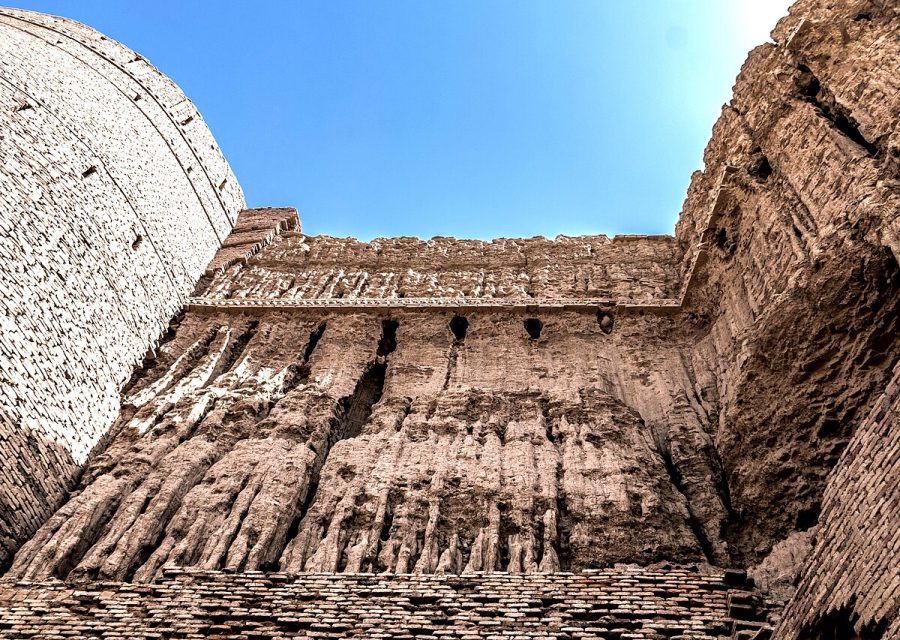
- Derawar Fort: A huge square fortress with forty bastions rising out of the Cholistan desert.
Islamabad Capital Territory
- Faisal Mosque: Islamabad’s landmark mosque, shaped like a desert tent at the foot of the Margalla Hills.
- Pakistan Monument: A granite monument shaped like a blooming flower, with a museum on the history of Pakistan.
- Saidpur Village: An old Potohari village at the foot of the Margallas, restored as a cultural village with restaurants and a Hindu temple.
Khyber Pakhtunkhwa
- Old Peshawar and Qissa Khwani Bazaar: One of the oldest living cities in South Asia: the Storytellers’ Bazaar, carved wooden houses, spice lanes and kahwa stalls.
- Mahabat Khan Mosque: A white 17th-century Mughal mosque in the heart of old Peshawar, with painted interiors and two slender minarets.
- Sethi House: A restored 19th-century merchant’s mansion with carved wooden doors, stained glass and painted ceilings.
- Takht-i-Bahi: A Buddhist monastery on a hilltop near Mardan, the best-preserved in Gandhara: a UNESCO World Heritage Site.
- Jamal Garhi: A ruined Buddhist monastery on a hill near Mardan, with a circular stupa court.
- White Palace, Marghazar: The white marble summer palace of the first Wali of Swat, built in 1940 and now a hotel.
- Chitral: A remote Hindu Kush town on the Chitral River, under the 7,708 m pyramid of Tirich Mir.
- Shahi Mosque, Chitral: The royal mosque of Chitral, built in 1924 by the Mehtar Shuja-ul-Mulk, with white domes against the mountains.
- Bumburet: The largest of the three Kalash valleys, with villages of wooden houses, walnut groves and the Kalasha Dur museum.
- Rumbur: A quieter Kalash valley north of Bumburet, with villages along a mountain stream.
Azad Jammu & Kashmir
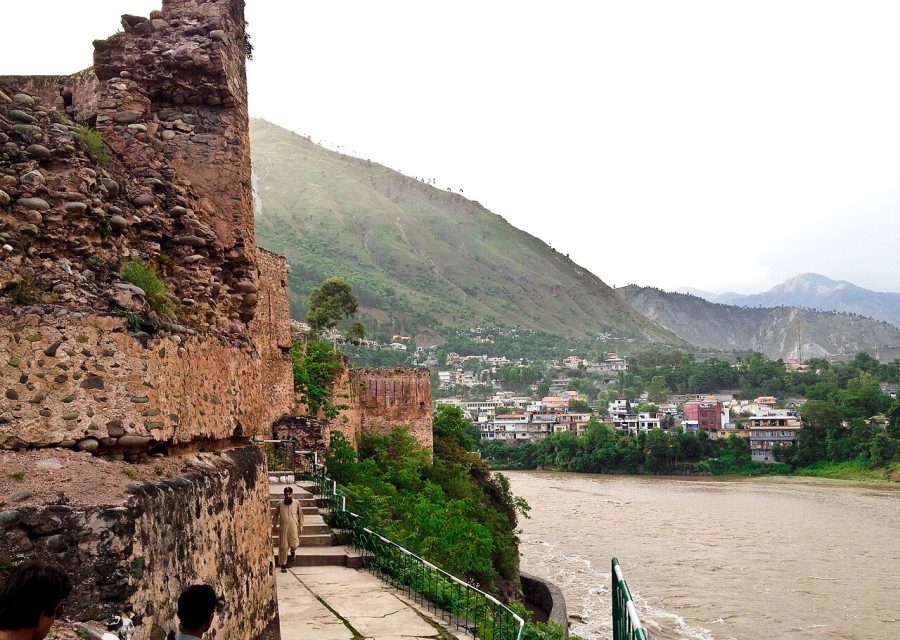
- Muzaffarabad: The capital of Azad Jammu & Kashmir, where the Neelum and Jhelum rivers meet, with the Red Fort and the viewpoint of Pir Chinasi.
Gilgit-Baltistan
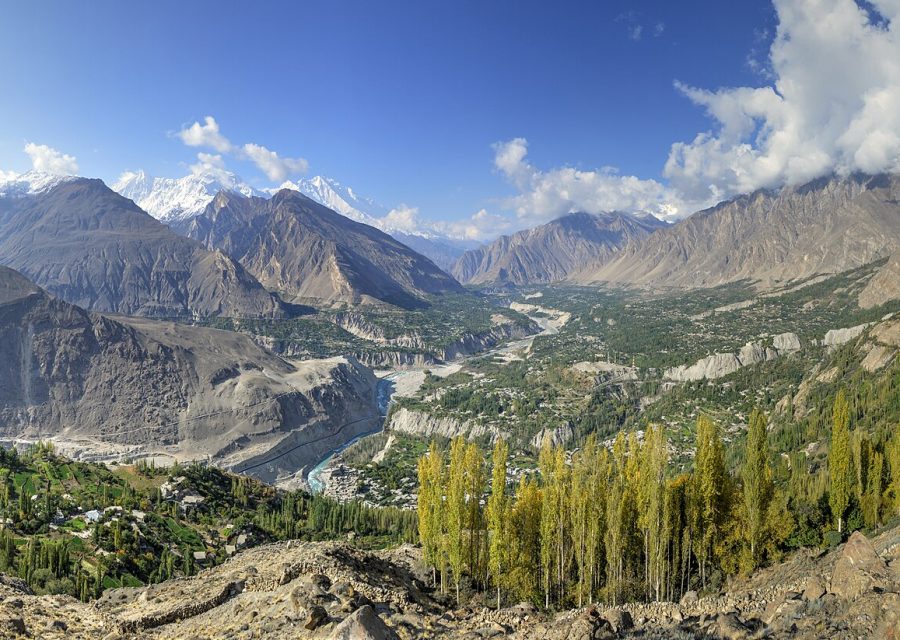
- Karimabad: Hunza’s old capital, stacked on a terrace below Ultar Peak, with Baltit Fort above the bazaar and orchards falling away to the river.
- Baltit Fort: The 700-year-old palace-fort of the Mirs of Hunza, restored by the Aga Khan Trust for Culture and now the valley’s finest museum.
- Altit Fort and Royal Garden: Older than Baltit and perched on a sheer cliff above the Hunza River, Altit Fort and its terraced Royal Garden are the quiet highlight of Central Hunza.
- Gulmit: The old summer capital of the Mirs in Gojal: a spread-out Wakhi village of orchards, a cultural museum and glacier walks.
- Shigar Fort: A 17th-century Balti palace restored by the Aga Khan Trust for Culture and now a heritage hotel and museum.
- Khaplu Palace: The 19th-century palace of the Yabgo rajas of Khaplu, restored and opened as a heritage hotel above the Shyok River.
- Yasin Valley: A historic valley north of Gupis, home of the Burushaski-speaking Yasin community and the old forts of its rulers.